On This Page
- What Is West LakeBeyond just a lake
- The Ten Classic Scenes西湖十景 — Song Dynasty viewpoints
- The New Ten Scenes新西湖十景 — 1985 additions
- Five DistrictsLake Core · South Lake · Hills · North · Center
- Walking Routes1hr · Half-day · Full-day · Two-day
- Boat RidesFerry · Rowboat · Night cruise
- Getting AroundWalk · Bike · E-car · Metro
- Best Time to VisitBy hour · By season · Avoid crowds
- FAQ6 common questions
West Lake (西湖) is the reason Hangzhou exists as a tourist destination — but most visitors misunderstand what it actually is. West Lake is not just a lake. It is a 60-square-kilometer scenic area containing the lake itself, two causeways, three islands, over 80 temples and pavilions, botanical gardens, hillside tea terraces, wetlands, museums, and entire neighborhoods that have grown around its shores for two millennia. Think of it as a national park in the heart of a city — a landscape so perfect it became the template for Chinese garden design worldwide.
In 2011, UNESCO inscribed West Lake as a World Heritage Site, not for the lake alone but for the entire cultural landscape — the way hills, water, causeways, and architecture have been composed over centuries into a living work of art that has inspired over 20,000 poems, countless paintings, and the design of the Summer Palace in Beijing and over 700 gardens across China and Japan.
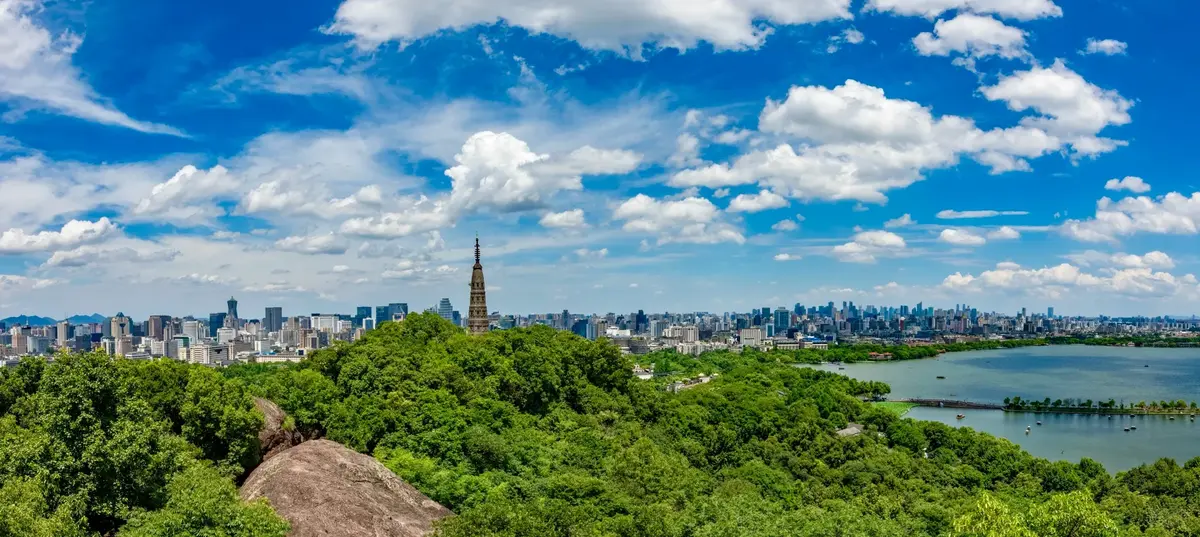
What Is West Lake — Beyond Just a Lake
The West Lake Scenic Area (西湖风景名胜区) encompasses far more than the 6.4 km² lake at its center. Here's what the scenic area actually includes:
- The Lake — 6.4 km² of freshwater, 3.2 km long, 2.8 km wide, average depth 2.3m
- Two Causeways — Su Causeway (2.8 km) and Bai Causeway (1 km), tree-lined pedestrian walkways dividing the lake into five areas
- Three Islands — Xiaoyingzhou (Three Pools), Huxin Pavilion, and Ruan Gong Dun, each with pavilions and gardens
- Surrounding Hills — Solitary Hill (孤山), Nanping Hill, Wu Hill, and the hills behind Lingyin Temple rising to 300m
- Historic Temples — Lingyin Temple (one of China's top 10), Jingci Temple, Yongfu Temple, and over 80 smaller shrines
- Pagodas — Leifeng Pagoda and Baochu Pagoda, bookending the lake's south and north
- Gardens & Parks — Huagang Park, Quyuan Lotus Garden, Prince Bay Park, Botanical Garden, Tea Museum, Guozhuang (the only intact Qing private villa garden on the lake)
- Museums — Zhejiang Provincial Museum, China Silk Museum, China Tea Museum, West Lake Museum
- Tea Country — Longjing Village, Meijiawu, and terraced hillsides producing China's most famous green tea
- Wetlands — Xixi Wetland (1,150 ha) just 5 km west, a separate UNESCO-adjacent ecosystem
This is why you need at least a full day — and ideally two — to truly experience West Lake. A two-hour walk along one causeway barely scratches the surface.
The ¥1 Note Connection
China's one-yuan banknote features the Three Pools Mirroring the Moon scene from West Lake. Hold the note up to the actual view and compare — it's one of only two Chinese banknotes depicting a real landscape (the other is the ¥50 with the Potala Palace). This tiny fact tells you everything about West Lake's status in Chinese culture.
The Ten Classic Scenes (西湖十景)
Named during the Southern Song Dynasty (1127–1279), these ten viewpoints represent the most iconic perspectives of the lake. Each captures a specific time, season, and mood — they are not just places but moments:
1. Su Causeway in Spring Dawn (苏堤春晓)
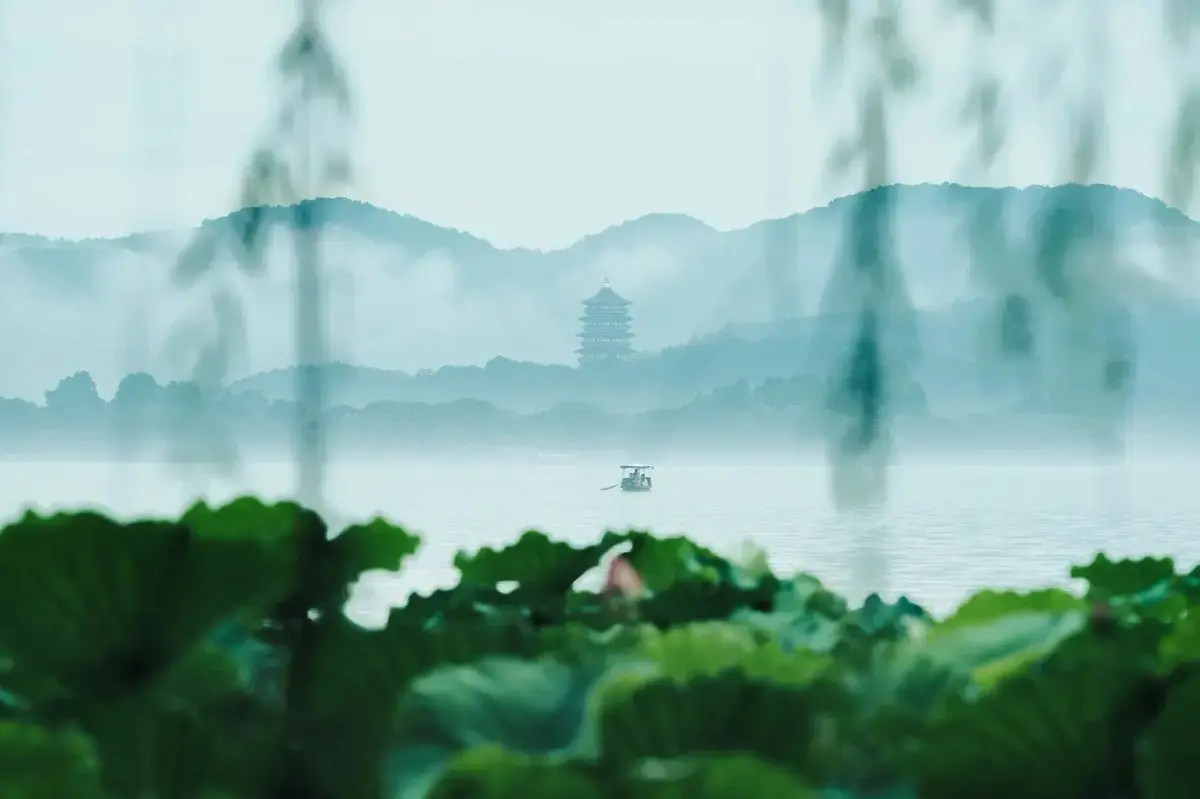
The 2.8-kilometer Su Causeway was built by the Song Dynasty poet-governor Su Dongpo in 1089 using dredged lake silt. Lined with weeping willows and peach trees, it is magical at dawn in spring — mist rises off the water, peach blossoms glow pink against the grey sky, and the only sounds are birdsong and your own footsteps. This is the single most atmospheric walk in Hangzhou.
2. Viewing Fish at Huagang (花港观鱼)
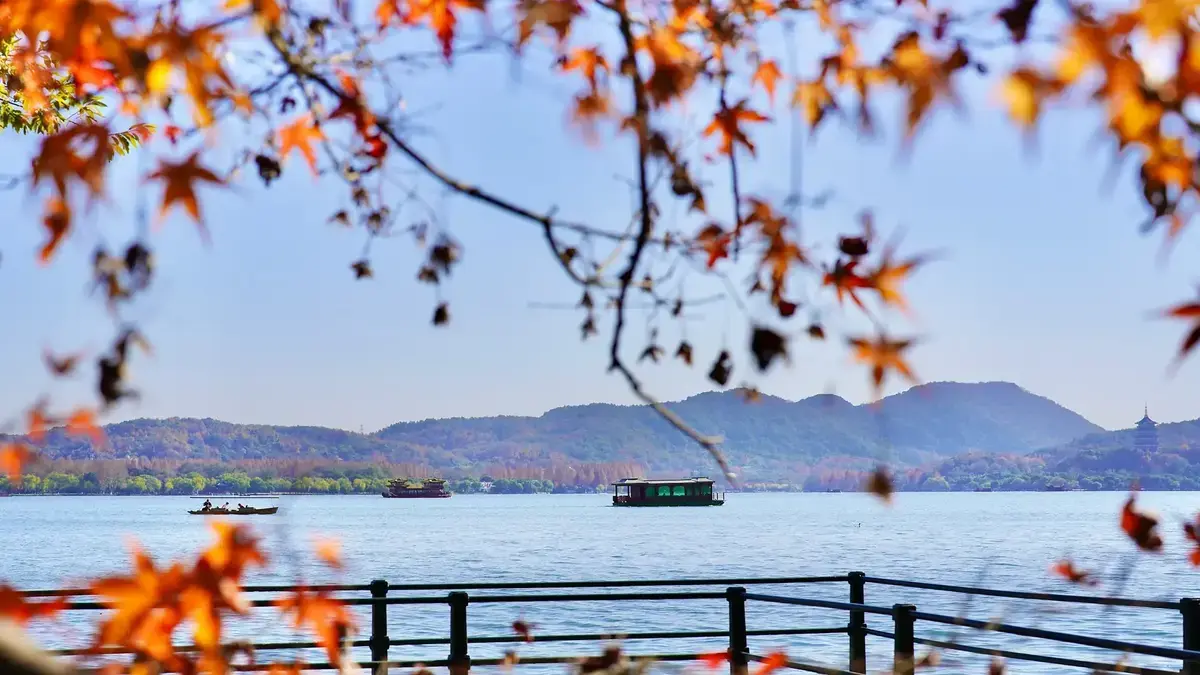
Huagang Park sits at the south end of Su Causeway. Its centerpiece is a large pond filled with thousands of red and gold koi, some over 50 cm long. The fish swarm to the surface when visitors approach, creating a churning carpet of color. The surrounding gardens feature peonies in spring and maples in autumn.
3. Leifeng Pagoda in Evening Glow (雷峰夕照)
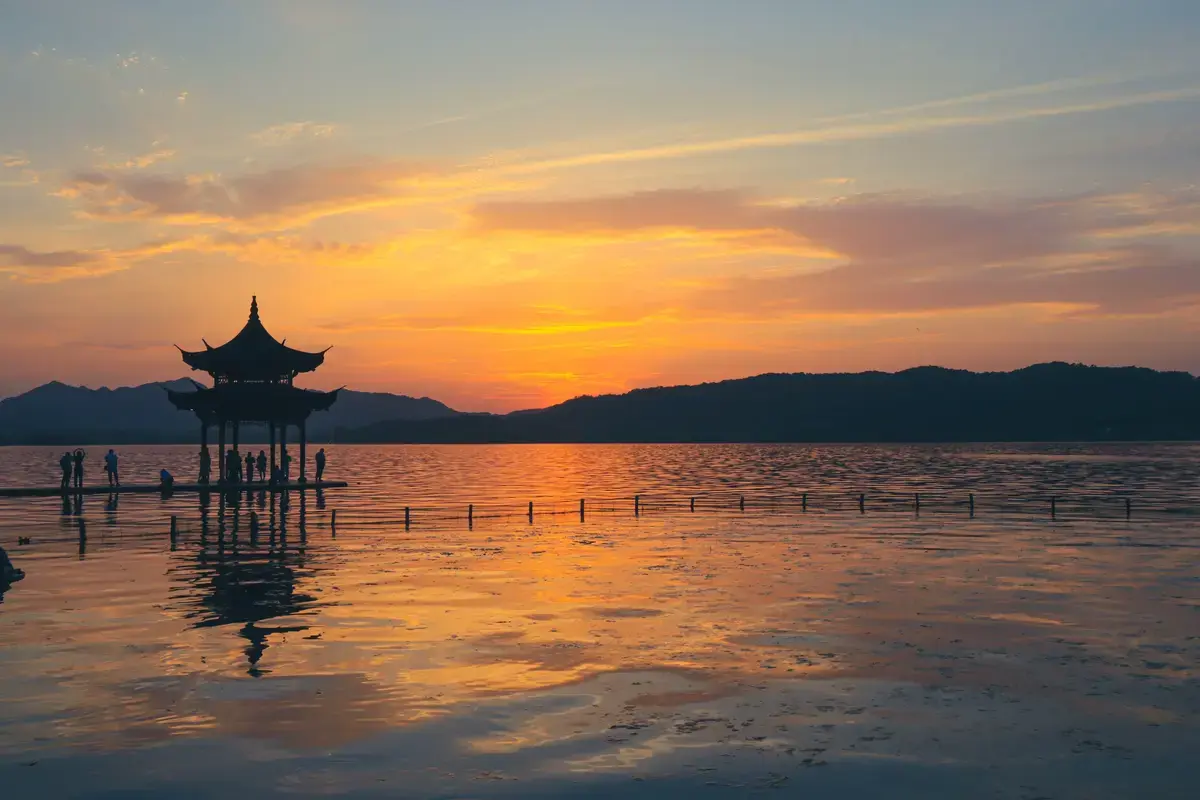
The reconstructed Leifeng Pagoda stands on the lake's south shore. At sunset, the five-story tower glows golden against the darkening sky — one of the most photographed moments in all of China. The pagoda is also the setting for the Legend of the White Snake, one of China's four great folk tales.
4. Evening Bell at Nanping Hill (南屏晚钟)
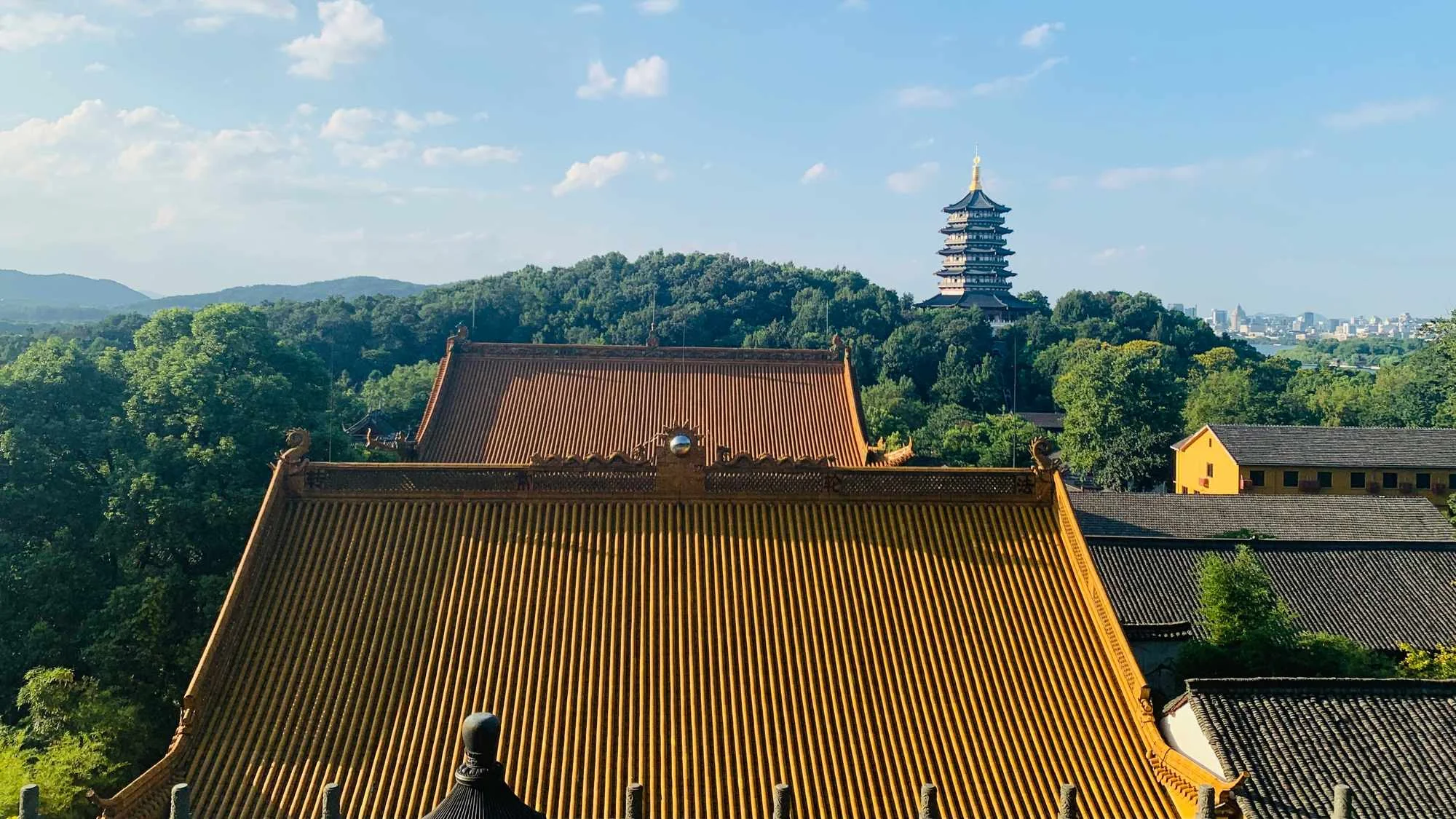
Jingci Temple (净慈寺), across from Leifeng Pagoda, rings its massive bronze bell each evening at dusk. The deep, resonant tone rolls across the lake and echoes off the surrounding hills — a sound that has marked the end of the day at West Lake for over a thousand years. The bell itself weighs 10 tons and is rung 108 times, symbolizing the elimination of 108 worldly troubles.
5. Three Pools Mirroring the Moon (三潭印月)
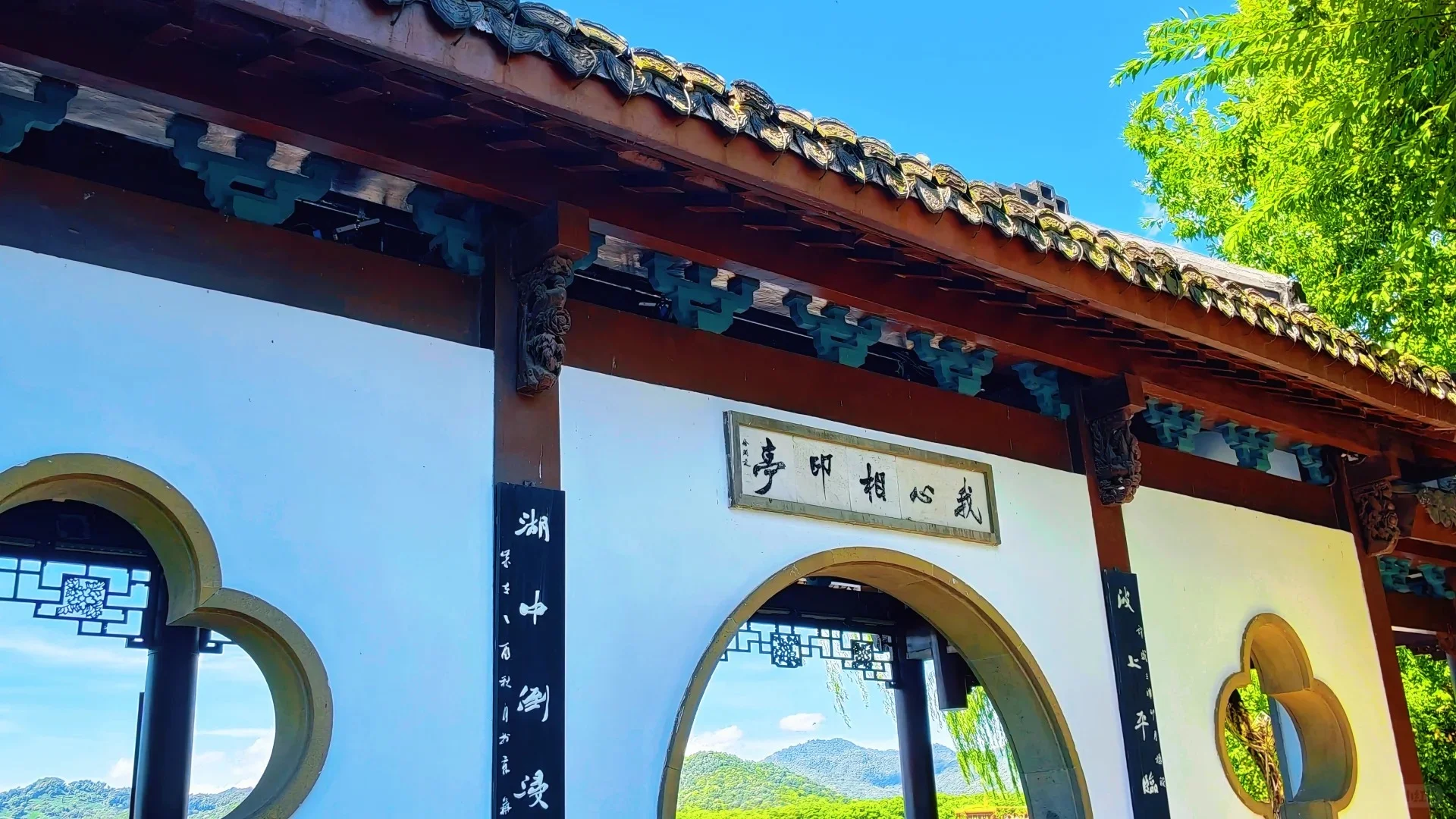
The image on China's ¥1 note. On Xiaoyingzhou Island, three stone pagodas stand in the water, each with five circular openings. On Mid-Autumn Festival night, candles are placed inside the openings, and the light passing through creates multiple reflections on the water — an illusion of countless moons. Even on ordinary nights, the pagodas' silhouettes against the moonlit lake are mesmerizing.
6. Autumn Moon over Calm Lake (平湖秋月)
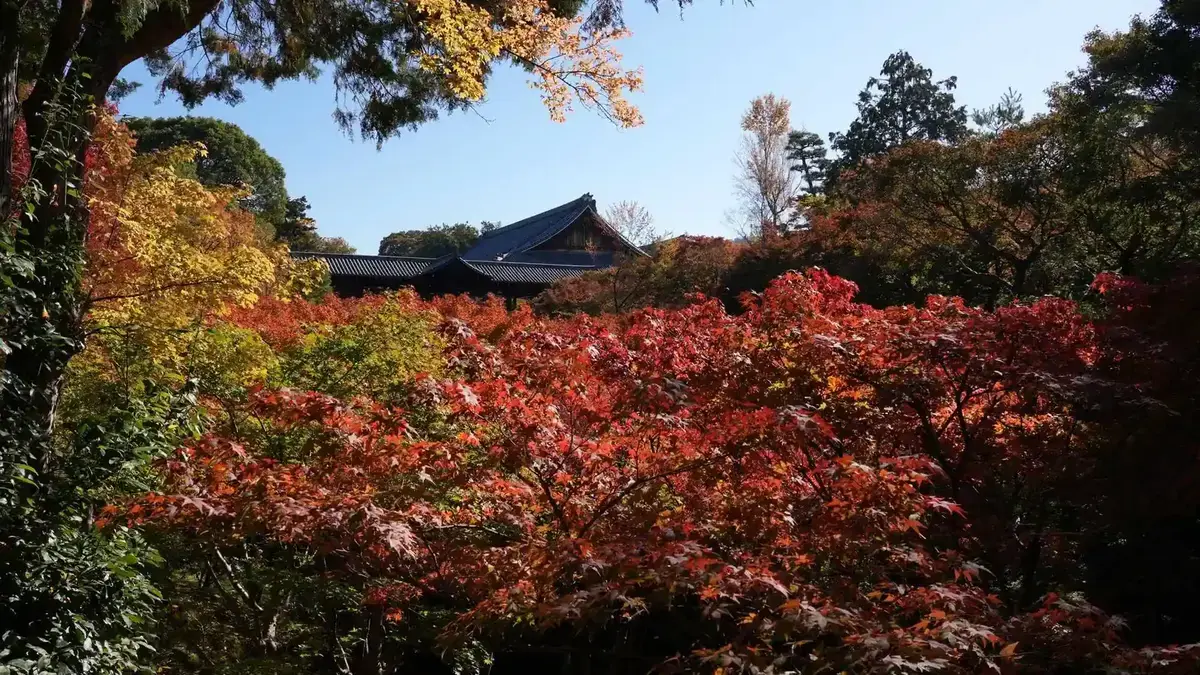
On a still autumn night, the full moon rises over the lake and creates a perfect reflection on the glassy water — the sky above and below indistinguishable. The best viewpoint is the Autumn Moon Pavilion on the northeast shore, where you can sit on a stone bench and watch the moonrise over the hills.
7. Lotus in the Breeze at Quyuan (曲院风荷)
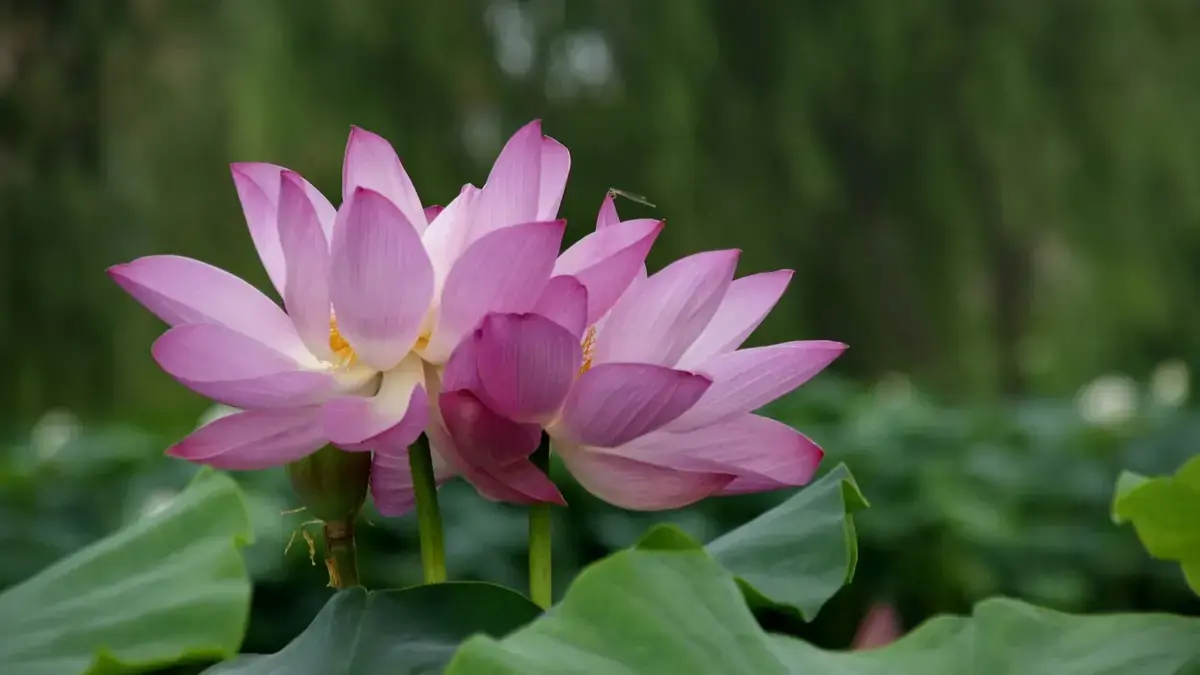
In summer (June–August), Quyuan Lotus Garden erupts into a sea of pink and white lotus flowers stretching across 30 pools. When a breeze ripples through, the flowers sway and release a subtle fragrance — a scene that has inspired some of China's most famous poetry. The garden also brews lotus tea and sells lotus-seed desserts.
8. Melting Snow on Broken Bridge (断桥残雪)
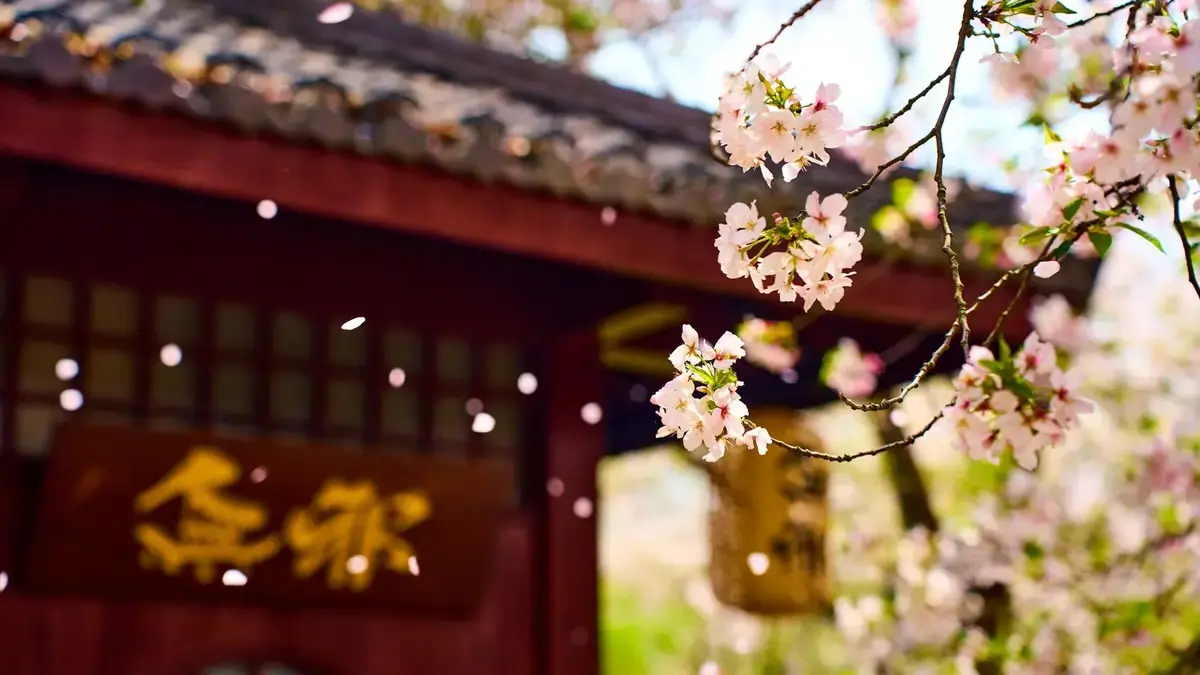
The rarest and most coveted scene. When snow falls on Hangzhou (typically once or twice per winter), the Broken Bridge on Bai Causeway becomes a stage for a visual paradox: the bridge's surface melts first, creating a patchwork of snow and stone that makes the bridge appear broken in two. This scene is also the setting for the tragic reunion in the White Snake legend.
9. Twin Peaks Piercing the Clouds (双峰插云)
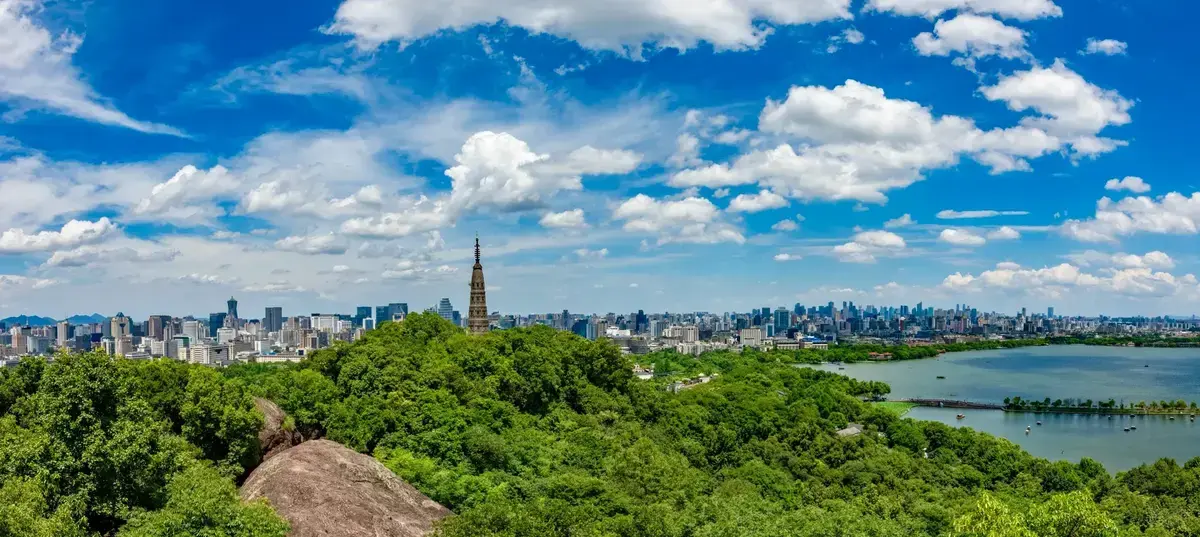
On the western shore, South Peak (南高峰, 257m) and North Peak (北高峰, 314m) rise above the lake. On misty mornings, the peaks emerge from a sea of cloud while the lake below remains hidden — two green islands floating in white. The best view is from the eastern shore near Hubin Park.
10. Orioles Singing in Willows (柳浪闻莺)
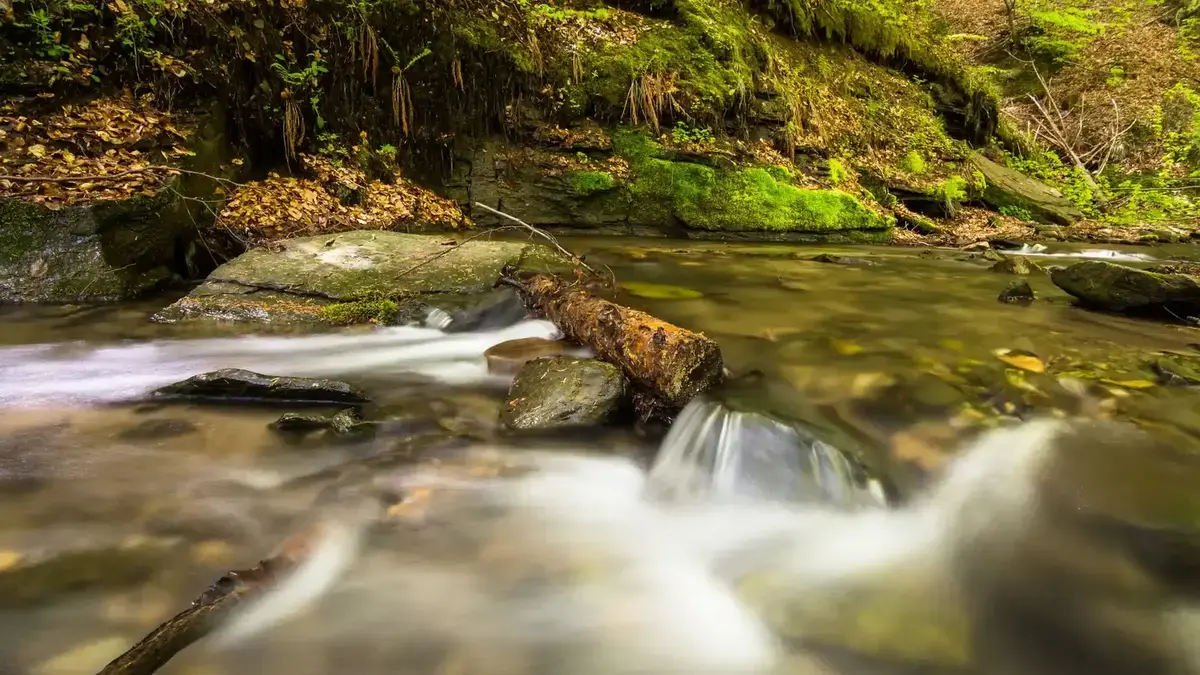
Orioles' Park (柳浪闻莺) on the southeast shore is a quiet grove of ancient willow trees where orioles nest in spring. The combination of golden birds, weeping willows, and lake views creates one of the most peaceful corners of the scenic area — a favorite spot for locals practicing tai chi or playing erhu.
The New Ten Scenes (新西湖十景)
In 1985, Hangzhou named a second set of ten scenes to highlight areas beyond the classic viewpoints — proof that the scenic area holds far more than the original ten:
1. Baochu Pagoda at Sunrise (宝石流霞)
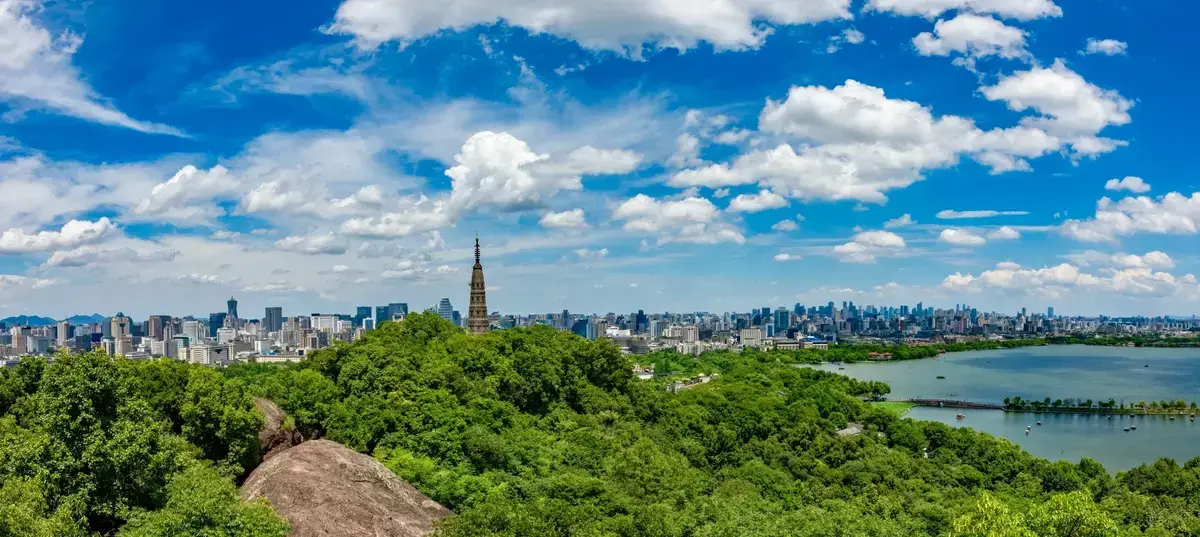
The slender Baochu Pagoda on Solitary Hill catches the first light of dawn, its stone silhouette glowing amber against the morning sky. Best viewed from Bai Causeway at sunrise — arrive early to watch the pagoda transform from shadow to gold.
2. Misty Rain at Nine Creeks (九溪烟树)
A winding valley of 18 streams and 9 creeks west of the lake, where mist clings to tea-covered hillsides after rain. The 3 km walk through bamboo groves and stone paths is Hangzhou's most atmospheric nature trail — go on a rainy day for the full effect.
3. Clouds over Wushan Hill (吴山天风)
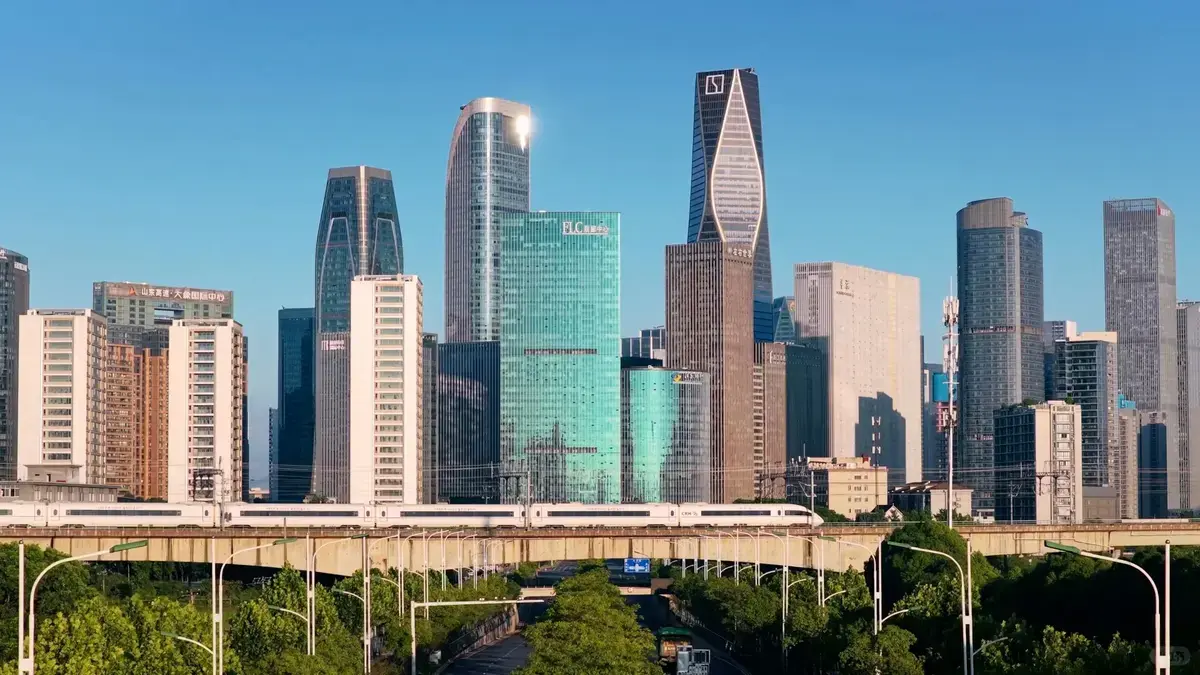
Wushan Hill rises at the southern edge of the lake, offering panoramic city and lake views from its summit. The hilltop pavilion catches strong winds — hence "Heavenly Wind" — and the walk up through old street neighborhoods is half the experience.
4. Dream of Tiger Spring (虎跑梦泉)
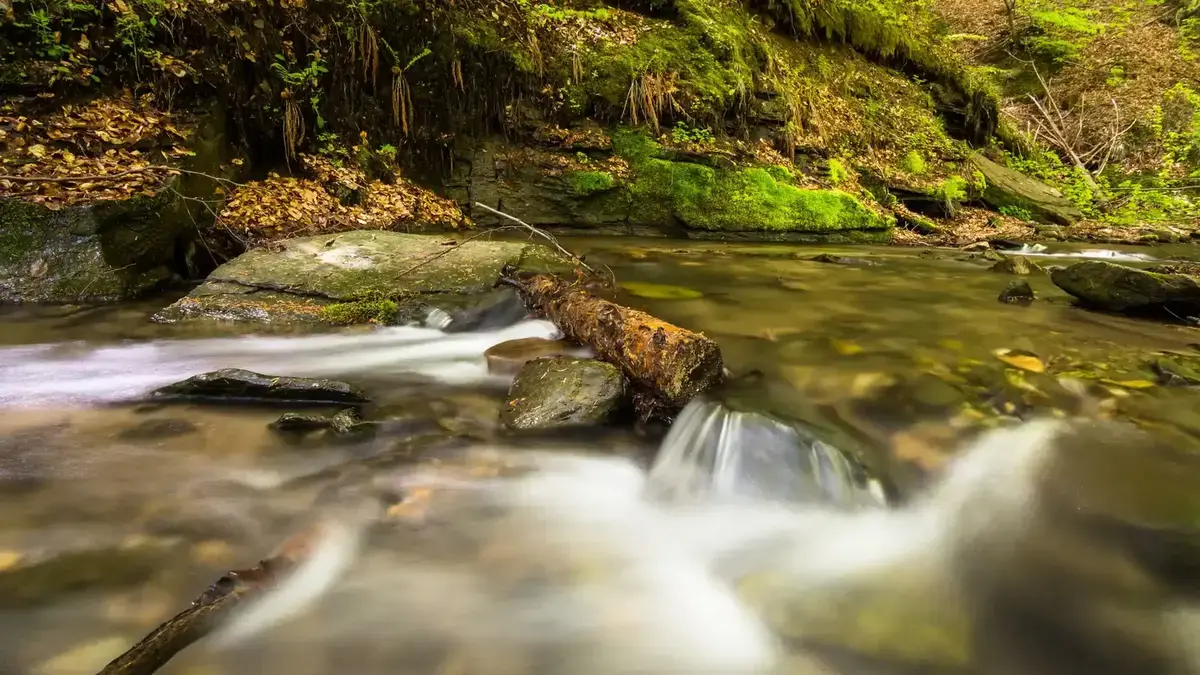
A natural spring in a forested valley south of the lake, where legend says a monk dreamed of two tigers digging a well. The spring water is so pure it was historically used to brew Longjing tea — you can still taste tea made with Tiger Spring water at the onsite teahouse.
5. Dragon Well Tea Inquiry (龙井问茶)
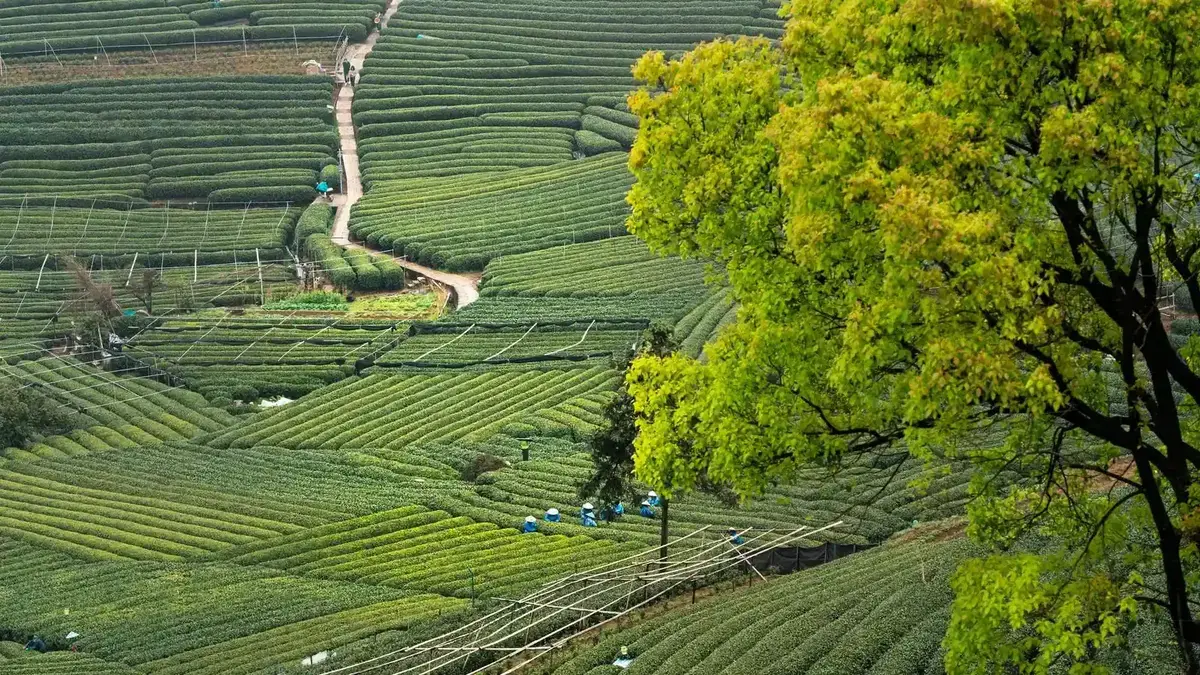
The birthplace of Dragon Well (Longjing) tea — terraced fields cascade down the hillsides, and village farmers invite visitors into their homes for tastings. Spring (March–April) is when the new crop is harvested and the hills turn bright green with fresh growth.
6. Yellow Dragon Cave in Emerald Green (黄龙吐翠)
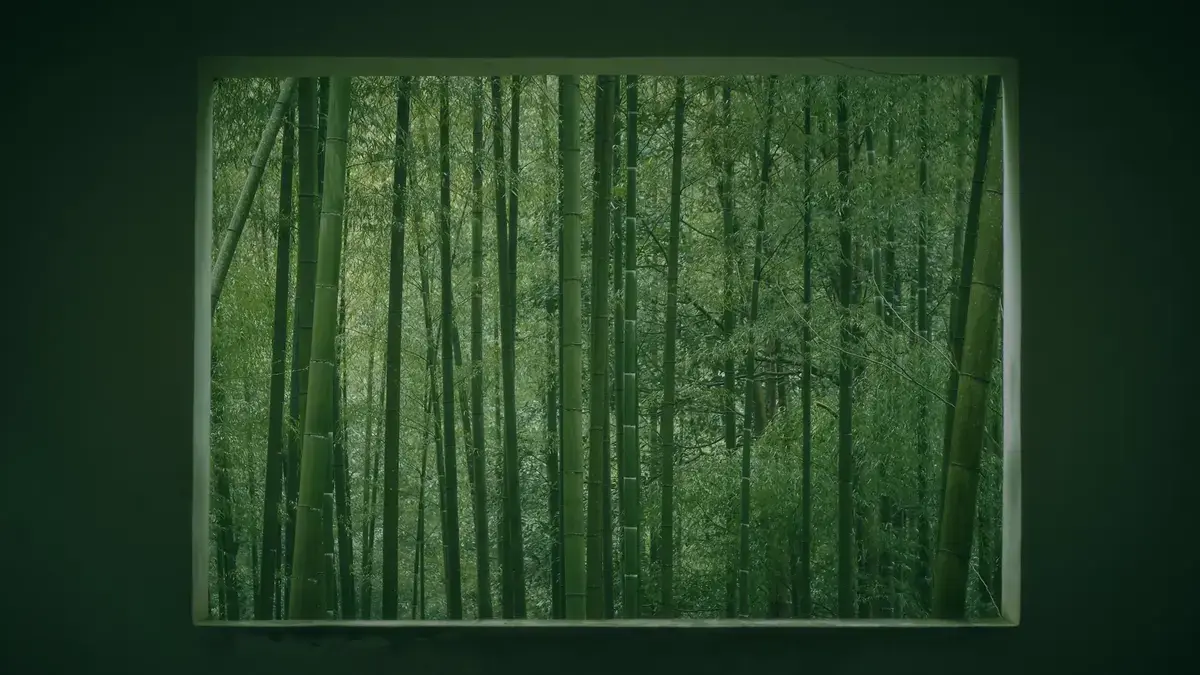
A Taoist garden tucked into a hillside, with bamboo groves, a natural spring, and stone carvings. The cave itself is modest — the real draw is the serene walk through towering bamboo that filters the sunlight into emerald patterns on the path.
7. Heavenly Wind over Jade Emperor Hill (玉皇飞云)
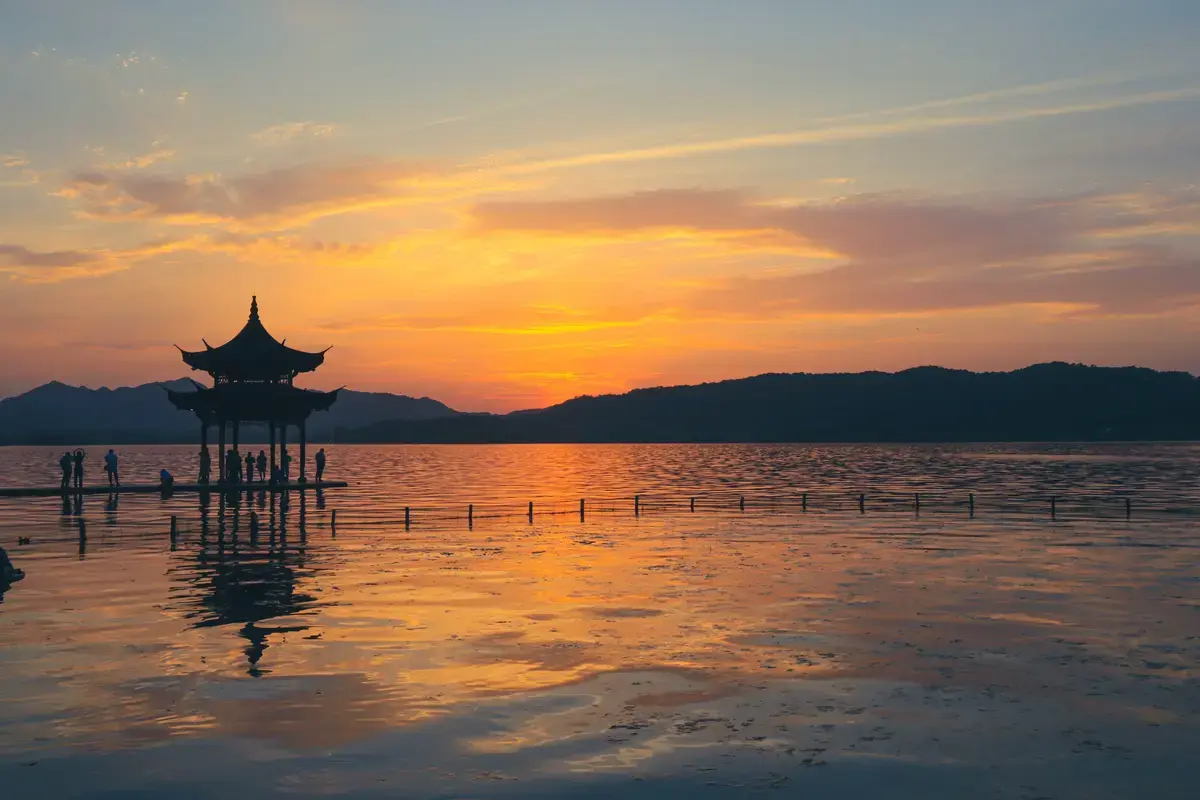
A hilltop Taoist temple with 360° views — on clear days you can see the entire lake, the Qiantang River, and the city skyline. The "flying clouds" are the mist that streams over the summit, creating a constant dance of light and shadow.
8. Buddhist Light at Lingyin (灵隐禅踪)
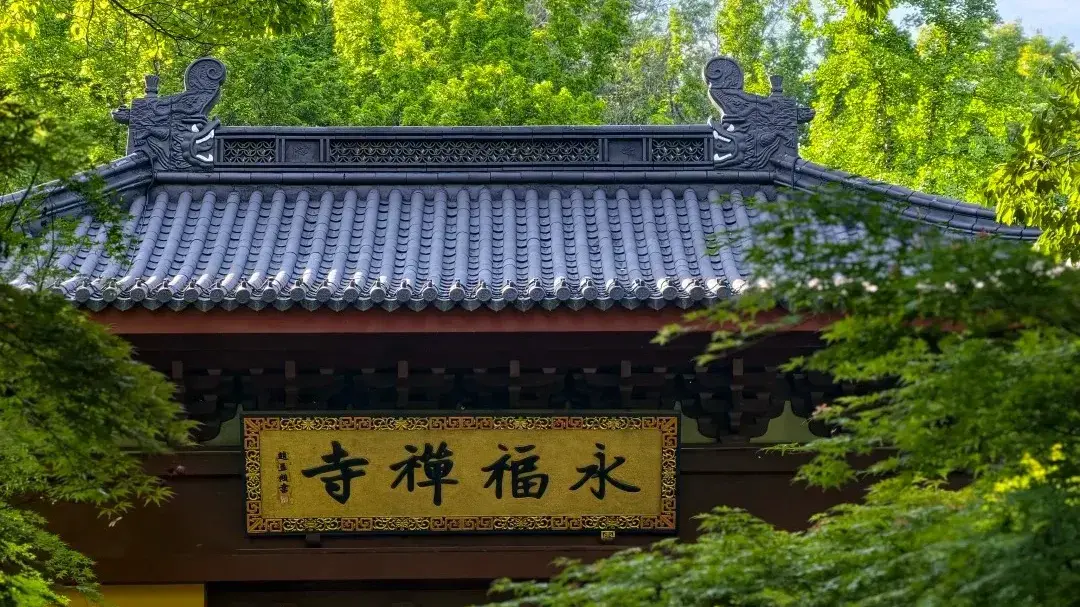
The ancient Lingyin Temple complex in the western hills — one of China's ten most important Buddhist temples, founded in 326 AD. The surrounding Flying Peak grottoes contain hundreds of stone Buddha carvings dating back to the 10th century.
9. Evening Glow at Yue Fei Temple (岳墓栖霞)
The memorial to Yue Fei, a Song Dynasty hero wrongly executed for treason. The temple grounds are lined with ancient maples that turn fiery red in autumn — the "evening glow" refers to both the sunset light and the autumn foliage reflected on the stone monuments.
10. West Lake in Drizzle (西湖霁雨)
The lake in gentle rain, when mist softens every outline and the world turns monochrome — bridges, pagodas, and willows become ink-wash paintings come to life. Don't avoid rainy days at West Lake; they reveal the landscape that has inspired 2,000 years of Chinese art.
These new scenes take you beyond the lakeshore into the hills, tea country, and cultural sites that form the broader scenic area — exactly the depth most tourists miss.
Five Districts of the Scenic Area
The West Lake Scenic Area is divided into five distinct zones, each with its own character:
Lake Core (湖滨区)
The bustling eastern shore — Hubin Road's promenade, the music fountain (nightly shows at 19:00 and 19:30), shopping at Hubin Pedestrian Street, and the Zhejiang Provincial Museum. This is where most tourists start and where the city meets the lake.
Getting here: Metro Line 1, Longxiangqiao Station, exit B — you'll be at the lake within 3 minutes on foot. Allow 1–2 hours for the promenade and museum.
South Lake (南湖区)
The most culturally rich zone — Leifeng Pagoda, Jingci Temple, the White Snake Legend cultural sites, and the serene fishponds of Huagang Park. The south shore is quieter than the east and rewards slow exploration.
Getting here: Bus 4 or 31 to Jingci Temple stop. Allow 2–3 hours for Leifeng Pagoda + Jingci Temple + Huagang Park.
West Lake Hills (西山景区)
The wild, green heart of the scenic area — Lingyin Temple, Flying Peak grottoes, Nine Creeks valley, Longjing tea village, and forested hiking trails. This zone alone could fill a full day. It's where the lake's surrounding hills become the story.
Getting here: Bus 7 to Lingyin Temple, or Bus 27 to Nine Creeks. Allow a full day — this zone is vast and deserves time.
North Lake (北湖区)
Solitary Hill (孤山) — a peninsula jutting into the lake, home to the West Lake Museum, the Zhejiang Provincial Museum (antiquities), the Xiling Seal Art Society, and the winter plum blossoms at the Botanical Garden. Baochu Pagoda rises at the north end, a slender counterpoint to Leifeng on the south.
Getting here: Bus 52 to Yue Fei Temple, then walk east along Bai Causeway. Allow 2–3 hours for the museums and Solitary Hill walk.
Center Lake (中湖区)
The three islands — Xiaoyingzhou (Three Pools Mirroring the Moon), Huxin Pavilion (the lake's most elegant structure, accessible only by boat), and Ruan Gong Dun (the smallest, most peaceful island). These islands are the lake's soul — classical Chinese garden design at its absolute peak.
Getting here: Boat from Hubin Pier (east shore) or Huagang Pier (south shore). Allow 1.5–2 hours including boat ride and island walk.
Best Walking Routes
Short Walk (1 hour) — The Classic Introduction
Broken Bridge → Bai Causeway → Solitary Hill → Hubin Park
Highlights: The iconic Broken Bridge view, willow-lined Bai Causeway, Solitary Hill's museums. Difficulty: Easy — flat, paved, suitable for all fitness levels. Best done at sunrise or after 18:00 to avoid crowds.
Half-Day Walk (3–4 hours) — The Essential Circuit
Broken Bridge → Bai Causeway → Solitary Hill → Su Causeway (north half) → Huagang Park → Leifeng Pagoda
Highlights: Both causeways, koi at Huagang, sunset at Leifeng. Difficulty: Easy–moderate — about 8 km, mostly flat. Start before 09:00 for the best experience. Bring water — few vendors on the causeways.
Full-Day Walk (6–8 hours) — The Complete Experience
Complete lake circuit including both causeways, Huagang Park, Leifeng Pagoda, Jingci Temple, and Solitary Hill. Add a boat ride to the Three Pools island.
Highlights: Everything above plus Jingci Temple bell, Three Pools island, and the full 15 km perimeter. Difficulty: Moderate — long distance but flat terrain. Break for lunch at a Hubin restaurant mid-day. Best October–November for comfortable walking weather.
Two-Day Deep Dive — Beyond the Shore
Day 1: Lake circuit (causeways, islands, pagodas) + evening music fountain at Hubin
Day 2: West Hills zone — Lingyin Temple → Nine Creeks → Longjing Village → tea tasting at a local farmhouse
Highlights: Day 1 covers the classic lake; Day 2 reveals the hills, tea terraces, and forested valleys that most tourists never see. Difficulty: Moderate — Day 2 involves some uphill walking on unpaved trails. Wear comfortable shoes and bring a day pack.
Boat Rides
| Type | Price | Duration | Best For |
|---|---|---|---|
| Large ferry | ¥55 | 50–70 min | Budget, island visit |
| Rowboat | ¥150/hr | 1–2 hr | Couples, privacy |
| Night cruise | ¥90–150 | 50 min | City lights reflection |
Boat Ride Tips
Buy tickets: At pier ticket windows (cash or Alipay). Large ferries depart every 15–20 minutes from Hubin, Huagang, and Yue Fei Temple piers. Best time: Late afternoon (16:00–17:30) for golden-hour light on the water. Rowboats can be hired at Hubin Pier — negotiate the route before boarding. Night cruises run 19:00–21:00, May–October only.
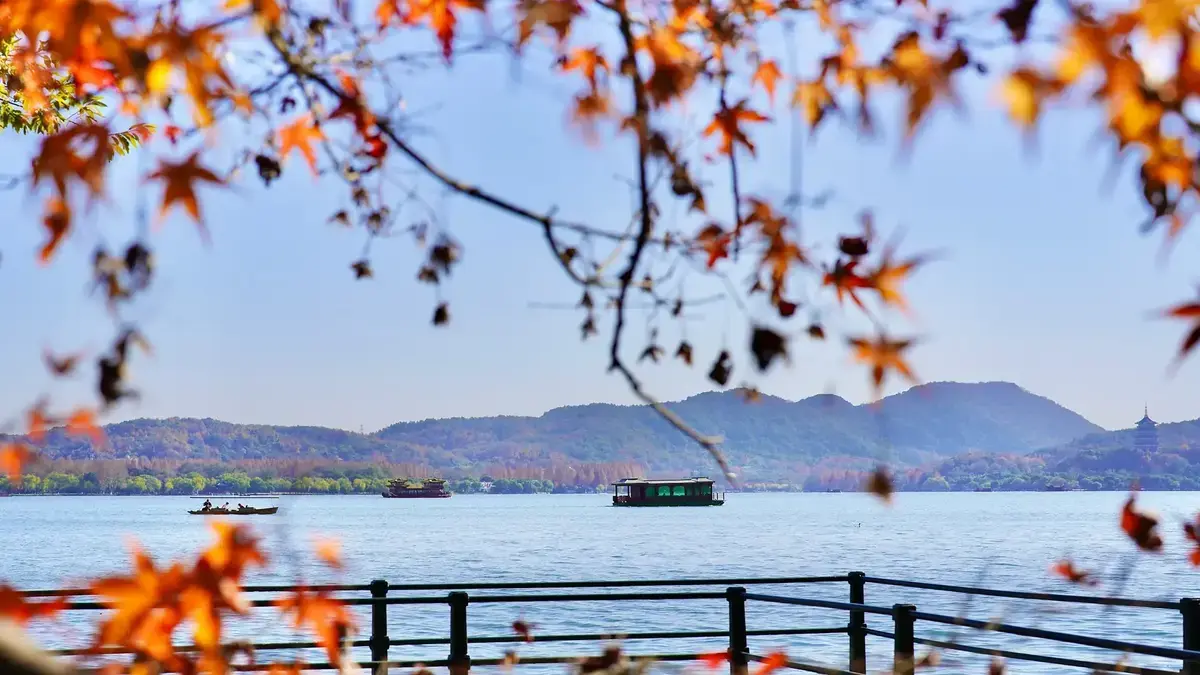
Getting Around the Lake
- Walk: The entire perimeter is about 15 km (3–4 hours at a relaxed pace)
- Bike: Rent from public bike stations (¥1–2/hour) or use HelloBike app — bikes can be picked up and dropped off at stations around the lake
- Electric sightseeing car: ¥40–60 per ride, hop-on-hop-off — runs along Su Causeway and the south shore
- Boat: See the Boat Rides section above
- Metro: Longxiangqiao Station (Line 1) is closest to the east shore — a 3-minute walk to Hubin Park
Best Time to Visit
By Time of Day
- Sunrise (05:00–06:30): Empty, magical light, perfect reflections — the lake at its most poetic
- Early morning (07:00–09:00): Few tourists, cool air, locals doing tai chi along the causeways
- Sunset (17:00–18:30): Golden hour, Leifeng Pagoda glows — arrive early to claim a spot
- Evening (19:00–21:00): Lit causeways, music fountain at Hubin — the lake transforms after dark
Avoid: Weekends 10:00–16:00 and national holidays (especially Golden Week in October and Spring Festival)
By Season
| Season | Best For | Highlight | Crowds |
|---|---|---|---|
| Spring (Mar–May) | Peach blossoms, Su Causeway | Su Causeway in Spring Dawn | High — especially April |
| Summer (Jun–Aug) | Lotus flowers, evening walks | Lotus in the Breeze at Quyuan | Very high — go early |
| Autumn (Sep–Nov) | Comfortable weather, moon views | Autumn Moon over Calm Lake | Moderate — best overall |
| Winter (Dec–Feb) | Snow scenes, empty paths | Melting Snow on Broken Bridge | Low — but cold |
FAQ
Is West Lake free?
Yes, the lake, causeways, parks, and most scenic areas are free. Only boat rides, Leifeng Pagoda (¥40), and Three Pools island (¥55 including boat) cost money.
How long should I spend at West Lake?
Minimum half a day for the highlights. A full day lets you see the causeways, islands, and pagodas. Two days lets you add Lingyin Temple, Longjing Village, and Nine Creeks — the full scenic area.
Can I swim in West Lake?
No, swimming is prohibited. The lake is a protected water source and cultural heritage site.
What's the difference between the Ten Classic Scenes and the New Ten Scenes?
The Classic Ten (西湖十景) were named in the Song Dynasty and focus on the lake itself — causeways, islands, reflections. The New Ten (新西湖十景) were named in 1985 and highlight the broader scenic area — hills, tea country, temples, and seasonal moments beyond the lakeshore.
Which causeway is better — Su or Bai?
Su Causeway (2.8 km) is longer, more scenic, and famous for spring dawn. Bai Causeway (1 km) is shorter but connects to Solitary Hill and the Broken Bridge. Walk both if you can — they offer completely different perspectives.
Is West Lake accessible for wheelchairs and strollers?
Mostly yes. The causeways and main paths around the lake are paved and flat. However, the islands (Three Pools, Huxin Pavilion) require boat access with steps, and some hillside paths (Nine Creeks, Lingyin) are not wheelchair-friendly. The Hubin promenade and Su Causeway are the most accessible routes.